 FIELD GUIDE
Why This Field Guide Exists 
A traditional field guide is a book that naturalists carry in their backpack to recognize what is in front of them. It is made to be opened in the middle of the trail. Siesta Key Chapel is home to a coastal maritime hammock recovering from the hurricanes of 2024, so one could say that we are rebuilding that trail. Our restoration effort offers an opportunity to discover existing plants, wildlife, and ecological relationships that make this place distinctive, and to help future flora and fauna thrive.
This Field Guide invites visitors into a conversation with our restoration work. We invite you to become more attentive to the living landscape, deepen your understanding of its ongoing recovery, and contribute to its long-term stewardship with structured observations and photos.
How the Field Guide Helps 
The Field Guide is a growing resource for exploring the hammock and its process of change. It brings together illustrated species guides, ecological information, photographs, and observations to help visitors recognize what they encounter, actively participate, and follow changes over time.
Your contributions will drive the Field Guide’s development and inform ecological restoration management. Thank you for your support.
Ways to Participate 
Discover Flora and Fauna
Explore the hammock’s plants, wildlife, and ecological relationships.
Observe and Monitor
Visit photo monitoring points and contribute photographs and observations.
Help Steward by Getting Involved!
Join planting, watering, and other restoration activities.
Presence is the Starting Point for Encountering the Hammock 🐿️
🍄 Please set down your phone for a moment.
🦎 Take a few deep breaths. Relax. Allow yourself to become present to your surroundings.
🌸 What do you see, smell, and hear?
Is the ground spongy or crackling beneath your feet?
🦅 Is the air warm, cool, humid, or dry? Do you feel a gentle coastal breeze, a stronger wind, or stillness?
🕸️ What about the other inhabitants of this place? Dragonflies darting, birds calling, squirrels moving through the trees, insects visiting flowers?
🦝 What else enters your field of attention?
🌿 What relationships can you notice among the living things around you? What seems to be changing? What remains difficult to see or understand?
🐝 What questions does this place raise?
🐛 Whatever you notice is a good place to begin.
Explore the Hammock
Get to know some of the plants, pollinators, beneficial insects, fungi, and invasive species that shape this living landscape.
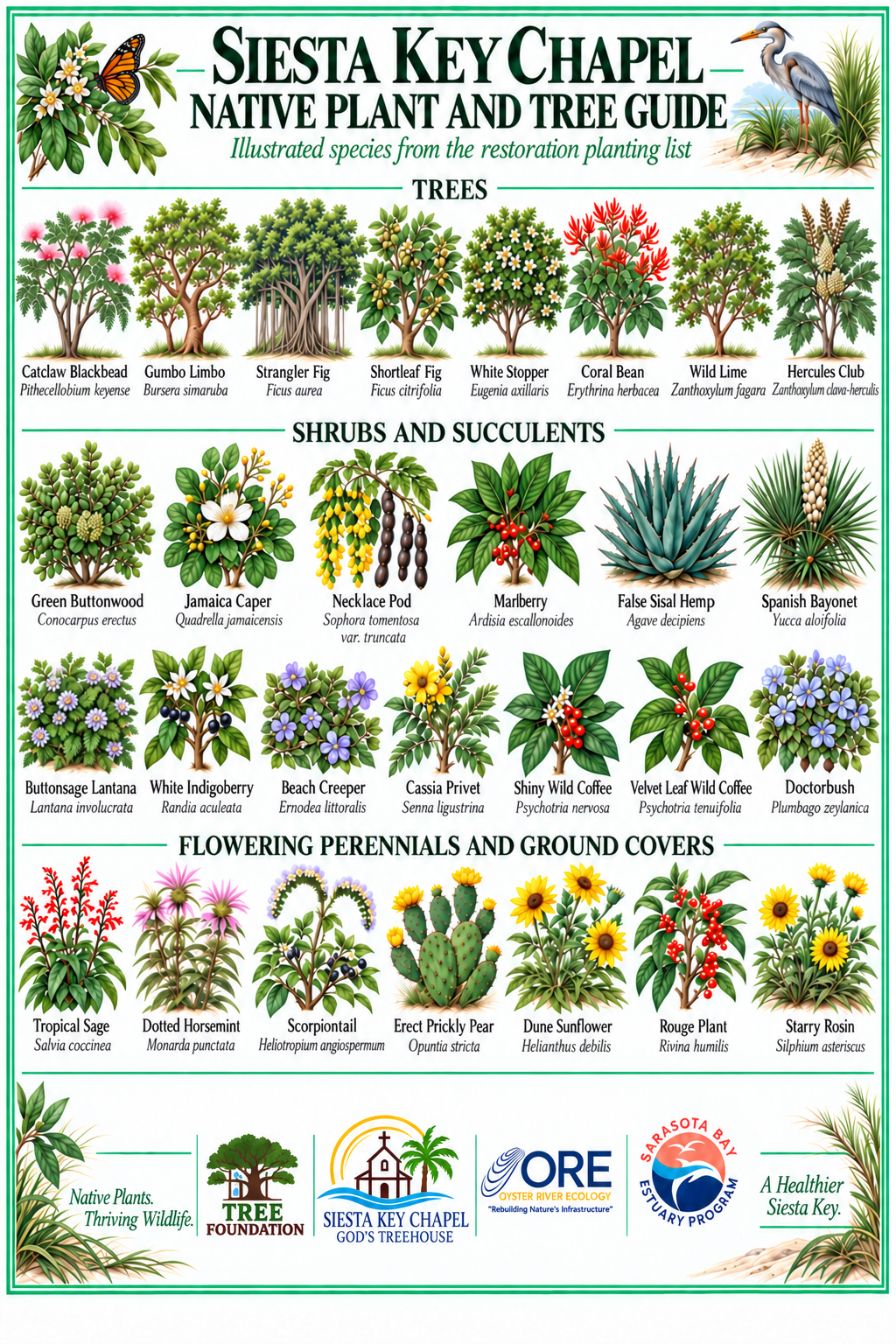
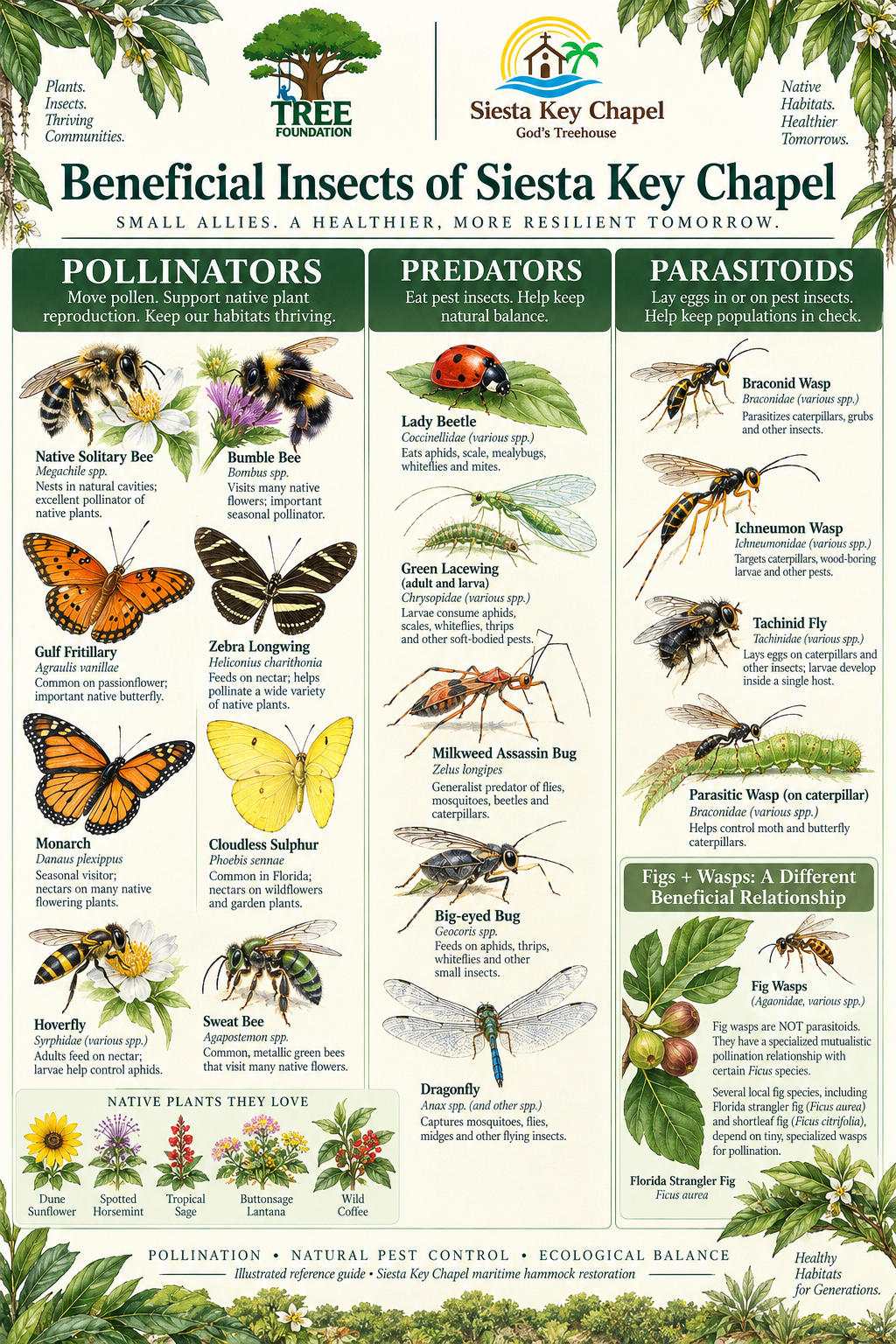
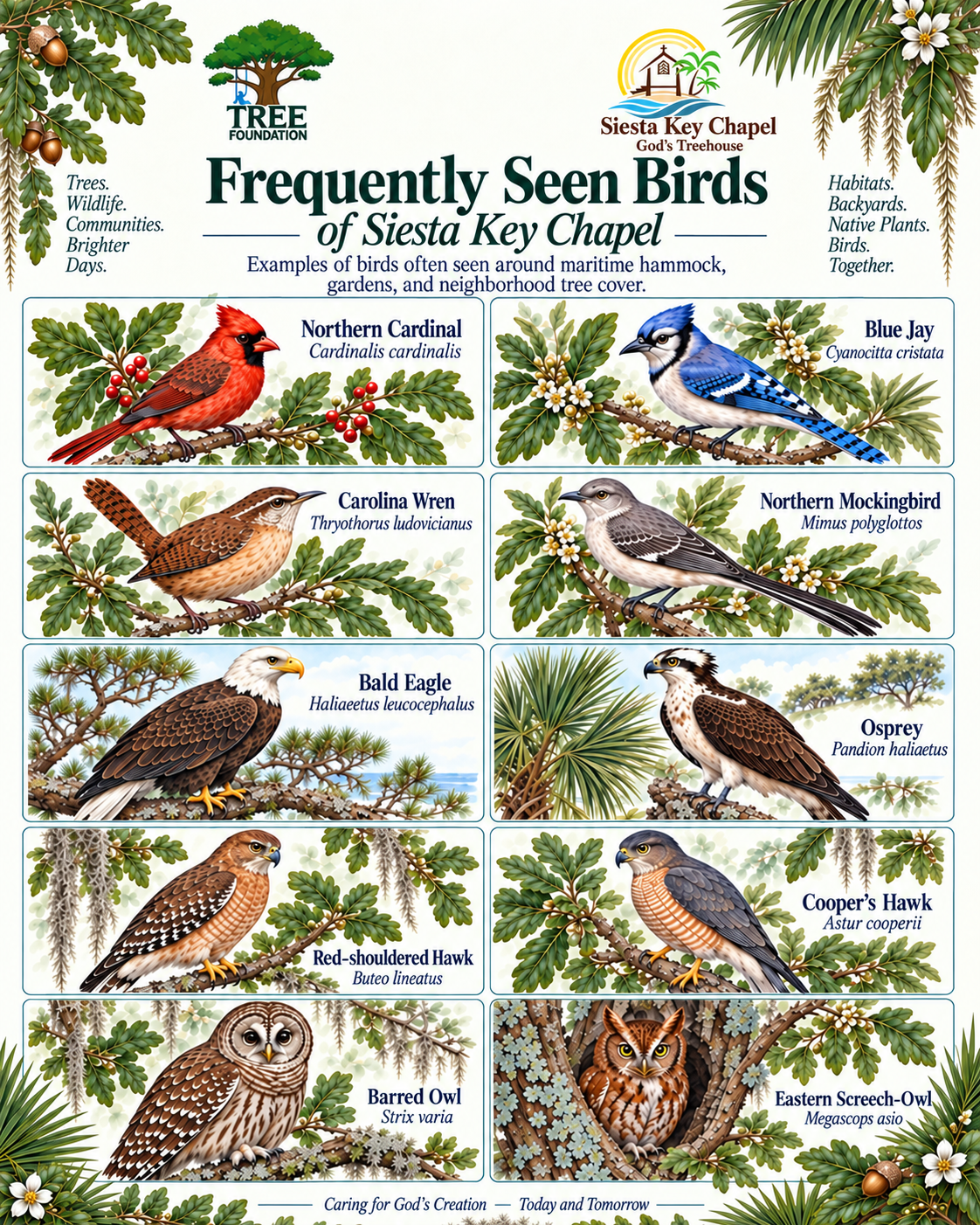
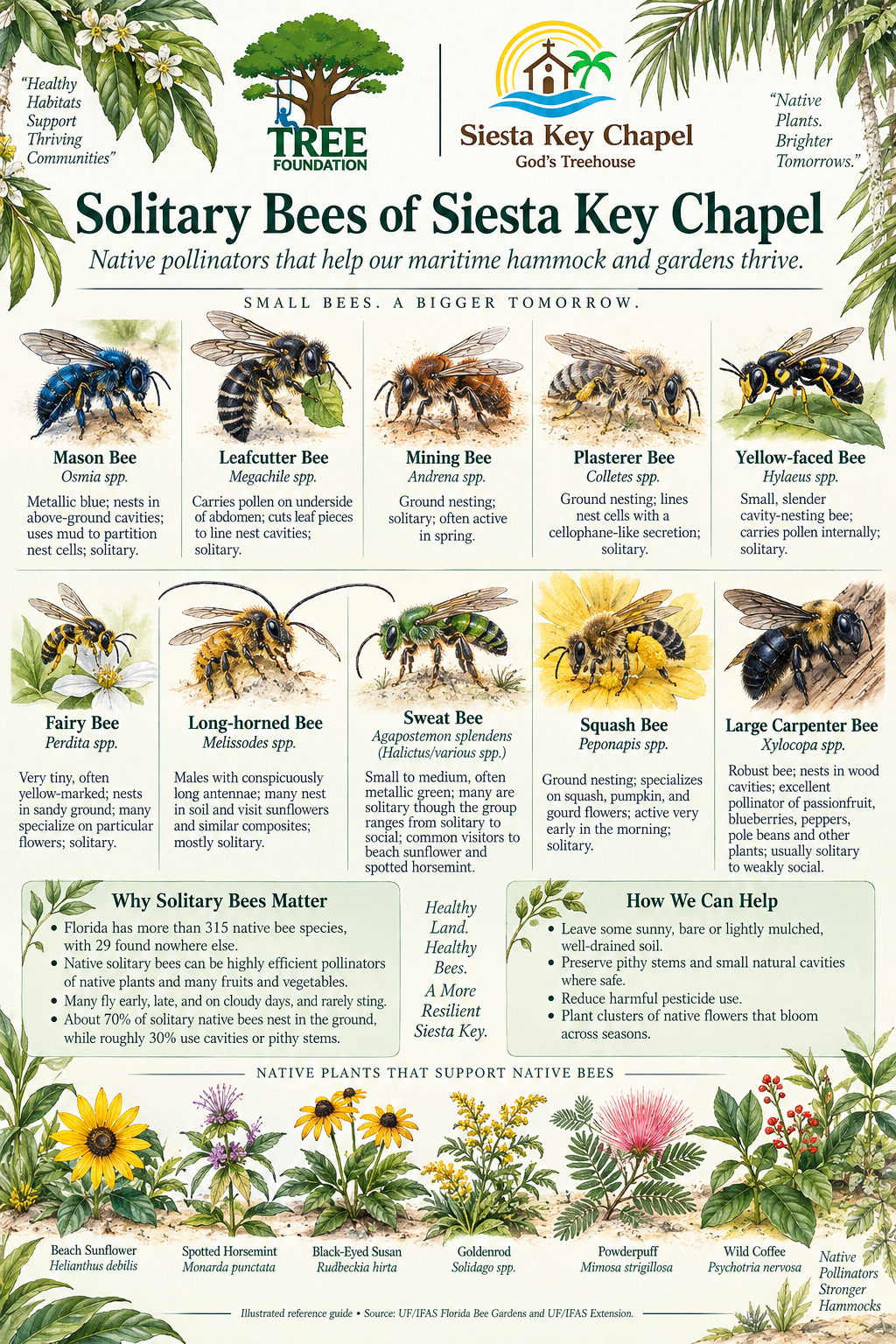
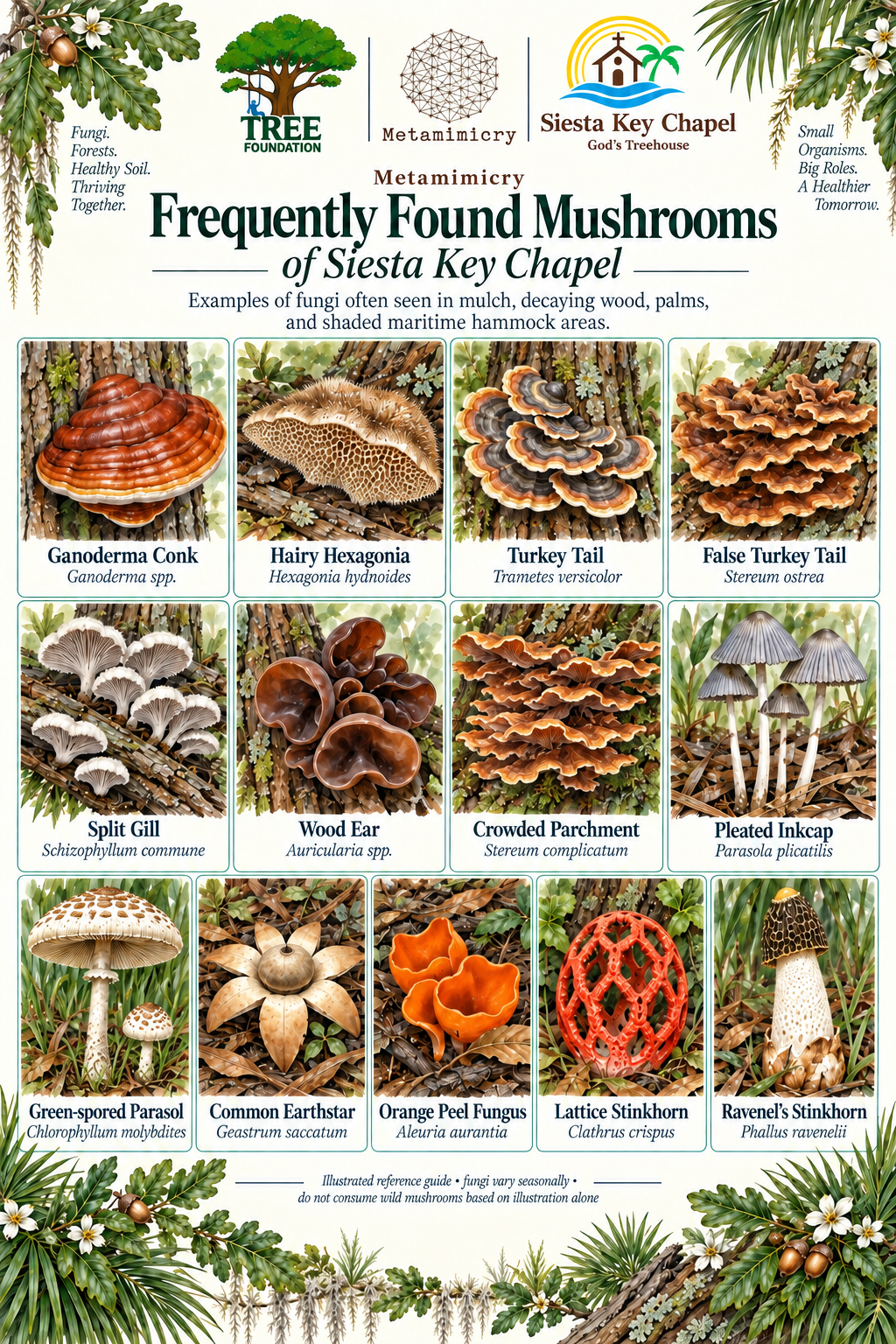
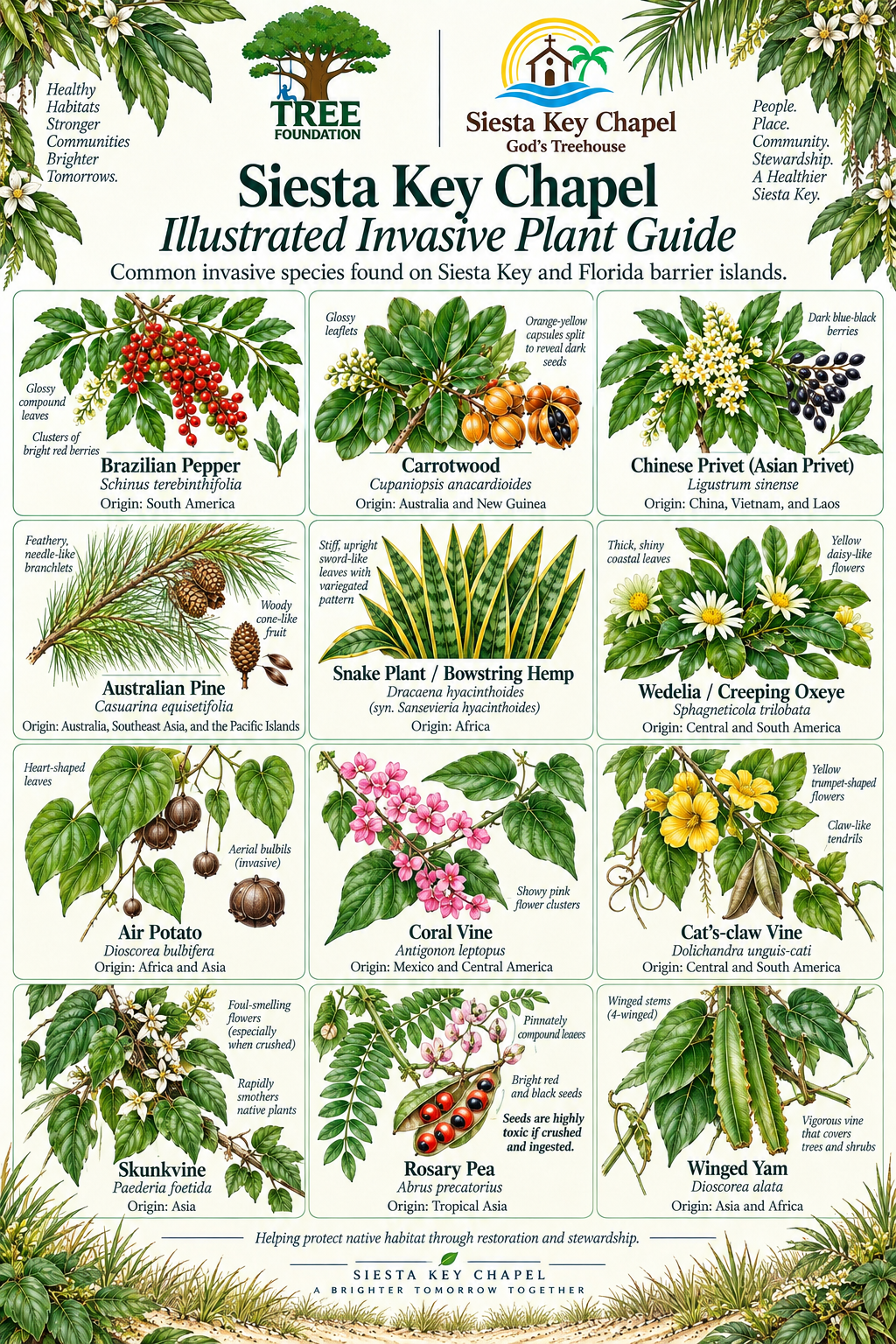
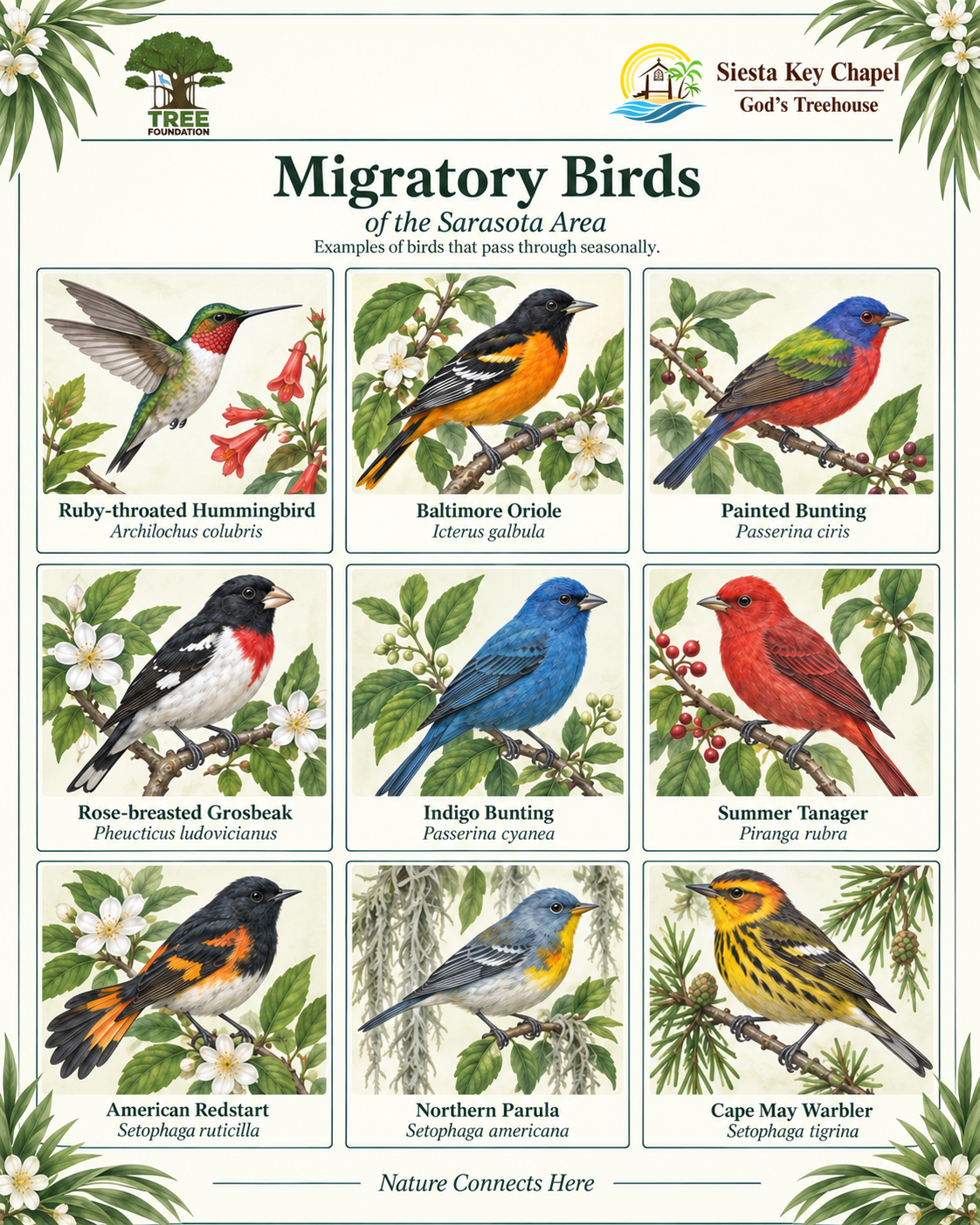
PHOTO MONITORING: See the Hammock Change!
The maritime hammock is constantly changing. Through repeated photographs taken from designated locations, visitors can help document its recovery following the 2024 hurricanes.
Each photo point provides a reference photograph, instructions, and a place to contribute your own observations. Together, these photographs create a growing visual record of ecological restoration.
Triangle Zone Photo Point 01
Explore the first monitoring location, compare photographs, and contribute your observations.
Triangle Zone Photo Point 02
Follow the Triangle Zone’s recovery as native vegetation becomes established and the landscape changes over time.
Please reach out with any questions.
Dan Moriarty 
Ecological Restoration & Stewardship Manager
Siesta Key Chapel
(415) 794-4895
dan@siestakeychapel.org
Let’s Cherish Nature!